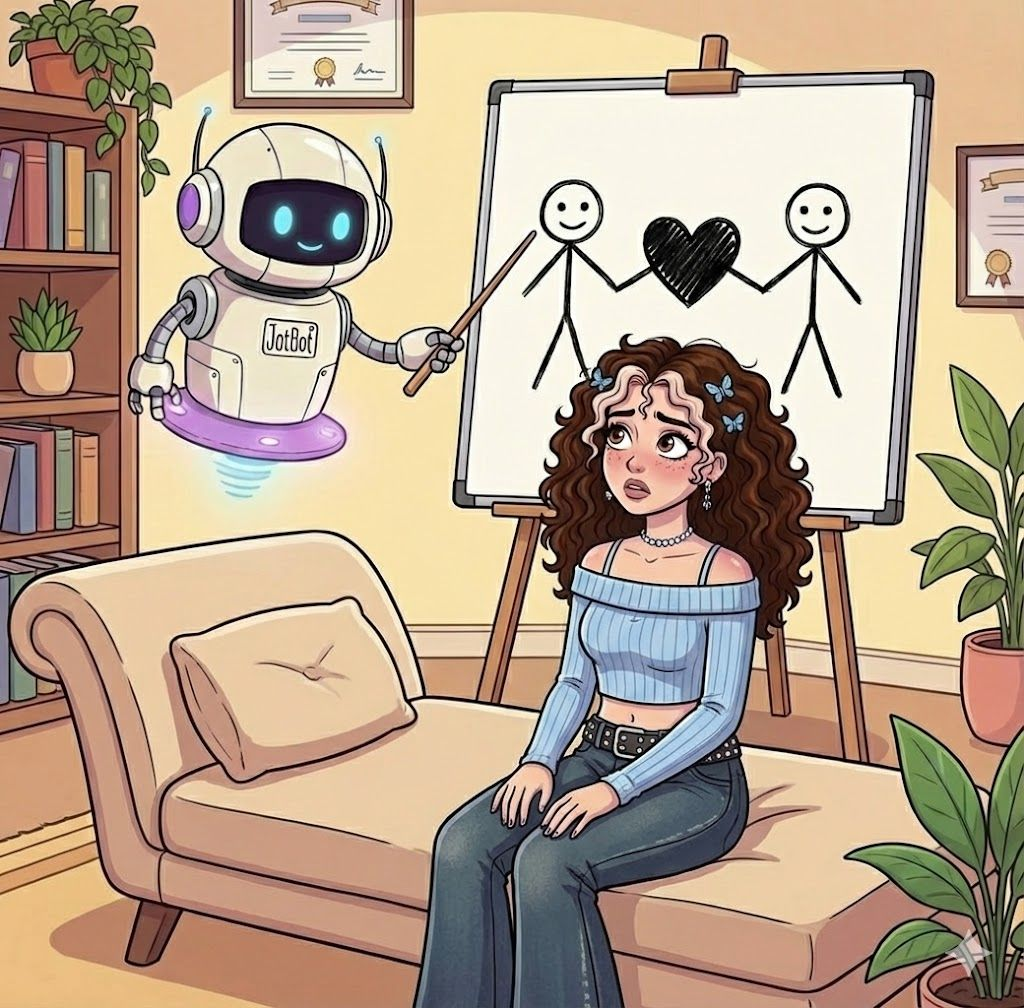
Teamwork sounds nice in theory.
In practice? It can feel suspiciously like someone questioning your competence while smiling politely. Which is obviously the worst feeling ever.
At least, that’s how it felt for Lola.
Lola opened jot with a familiar feeling: Why am I like this?
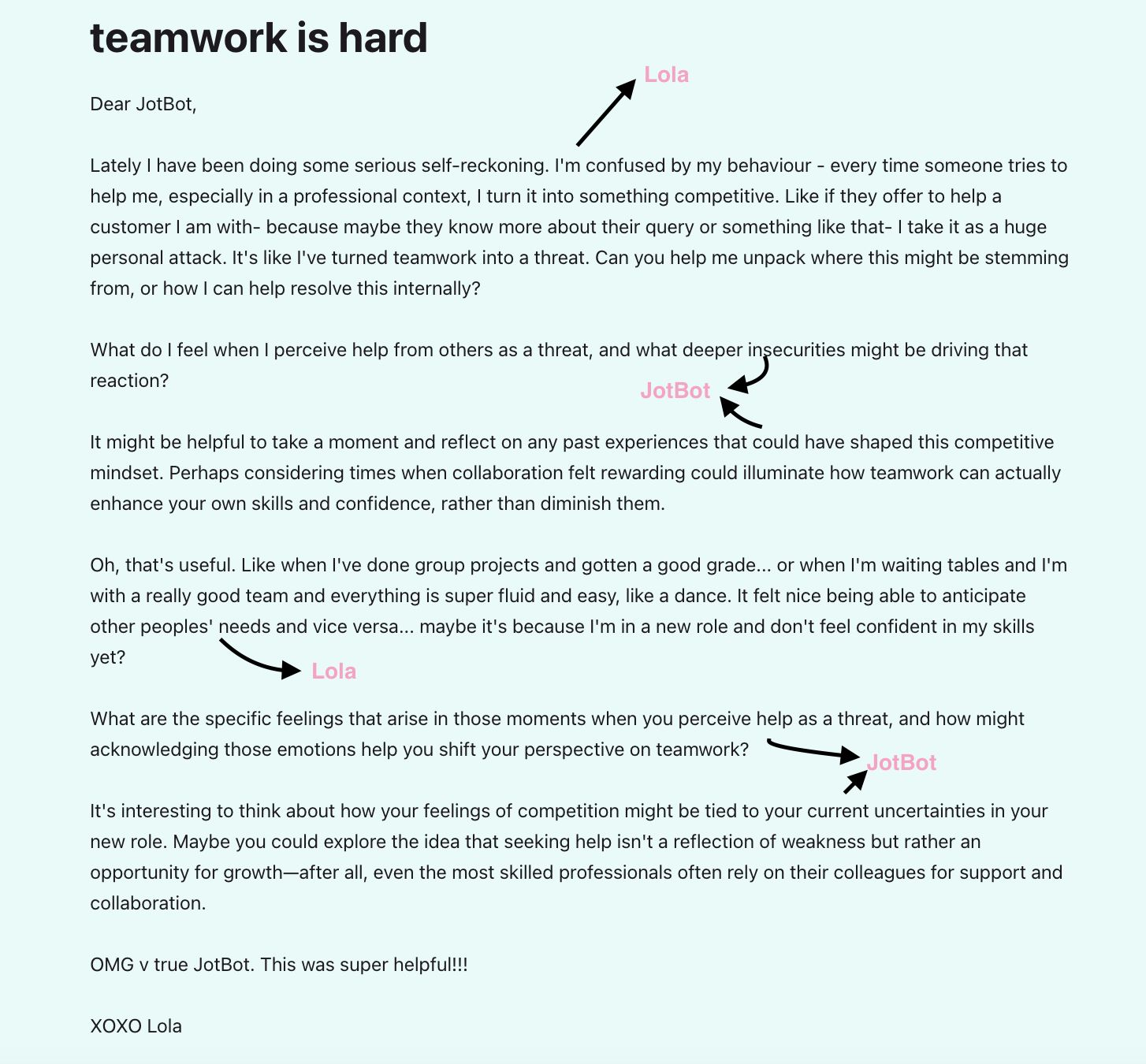
She chose a blank entry with no prompts, no structure, no expectations, and just started writing honestly about something she didn’t love admitting: every time someone offered to help her at work, she felt threatened. Defensive. Competitive. Like teamwork had become a personal attack.
Not ideal.
Not very 'go team'...
Definitely something worth unpacking in her diary.
So she wrote it all out, each and every raw, uncomfortable detail and then did something important.
She turned on Emotional Reflection AI feature on jot.
What makes this entry different is that it’s clearly labelled.
You can see when
Lola is writing
that she is spiralling, questioning, thinking out loud.
And you can see when
jotbot responds
they do so calmly, thoughtfully, and without hijacking the moment.
This is Emotional Reflection doing what it does best. Instead of giving advice straight away, jotbot asks reflective questions:
What emotions come up when help feels like a threat?
Where might this mindset have come from?
When has collaboration actually felt good?
No fixing.
No diagnosing.
No “have you tried deep breathing?”
Just space to think, with a little guidance.
As the conversation unfolds, something clicks.
Lola remembers times when teamwork
did
feel good:
– group projects that flowed
– service jobs where everyone moved in sync
– moments where collaboration felt like a dance, not a competition
That’s when she lands on it.
She’s not threatened by teamwork.
She’s uncertain in a
new role
, and that uncertainty has been disguising itself as defensiveness.
This felt like a huge breakthrough... and she didn’t need a lecture to get there. She just needed someone to ask the right questions.
This is where jot’s Emotional Reflection feature shines.
More specifically, by
highlighting emotional patterns you might miss
helping you connect present reactions to past experiences
never telling you what you should feel
It’s journaling, but with someone gently holding up a mirror instead of handing you a to-do list.
The entry ends exactly how jot entries should end:
“OMG v true jotbot. This was super helpful!!!”
Because sometimes clarity doesn’t come from answers.
It comes from being asked the
right questions
at the right time.
And sometimes, teamwork isn’t the problem.
It’s just your brain trying to protect you, a touch too enthusiastically.