
Lola didn’t open jot that day with a plan.
She opened it because her brain was loud, her heart was doing that annoying post-romantic-adventure thing, and Paris was still very much echoing around her head.
The trip had been impulsive. The double date even more so. And now, back home, Lola was left with the emotional debris: excitement, disappointment, relief, a bruised ego, and the undeniable thrill of being reminded that yes — attraction is still possible.
So she did what she usually does when life hands her a confusing cocktail of feelings.
She opened her diary.
In jot, Lola didn’t choose a prompt. She didn’t pick a template. She just opened a blank entry and started typing.
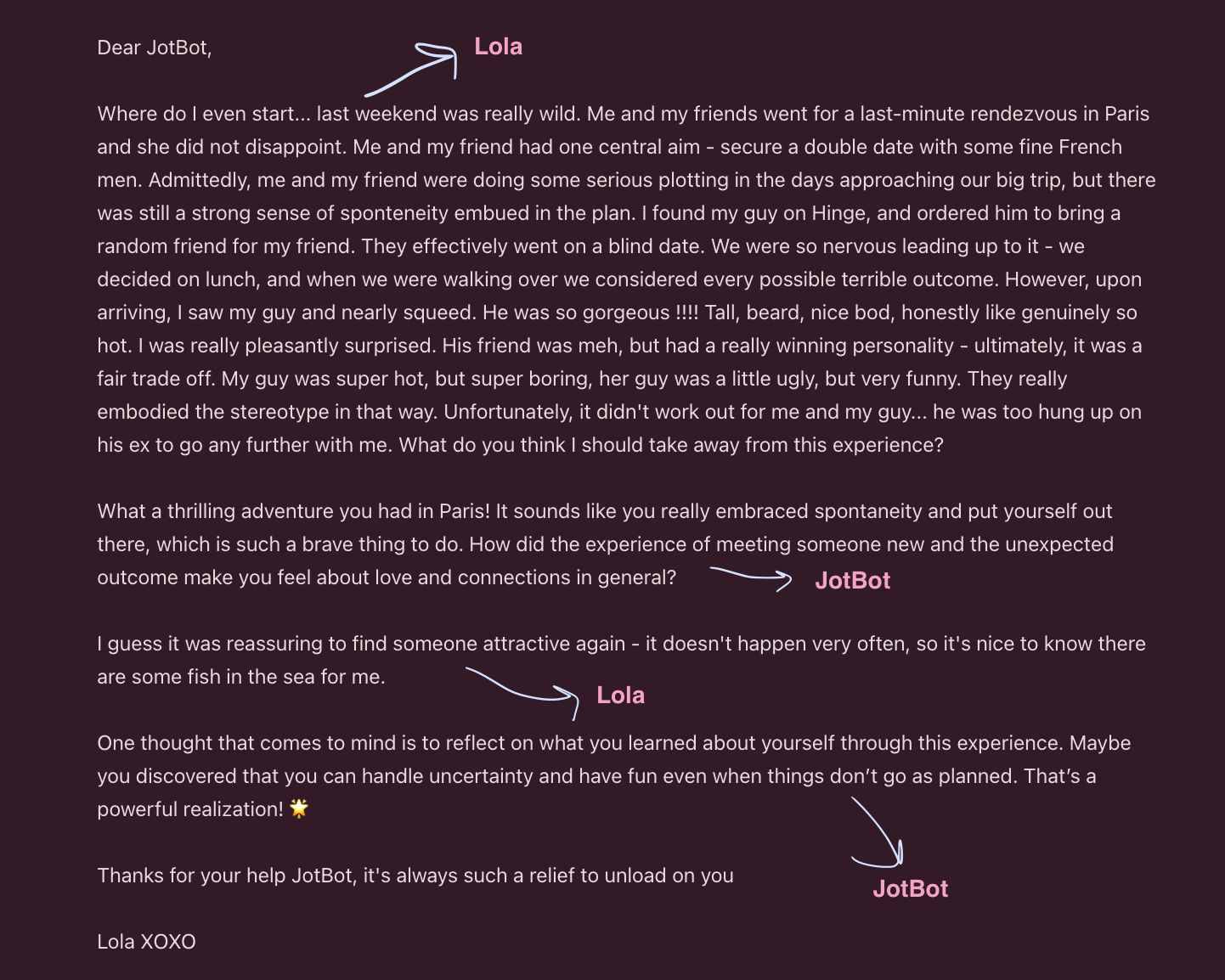
No structure. No expectations. Just:
Dear JotBot…
She wrote it all out — the plotting, the nerves, the lunch date panic, the moment she saw him and nearly squealed, the realisation that chemistry doesn’t always mean compatibility. The boring-hot guy. The funny-not-hot guy. The slightly devastating revelation that her date was still emotionally unavailable.
Messy. Honest. Very Lola.
This is the power of a blank diary entry: it lets the story come out exactly as it needs to. No boxes to tick. No “right” emotion to land on. Just the truth, in whatever order it arrives.
Once Lola had unloaded everything onto the page, JotBot did what it does best — not fixing, not analysing her to death, but nudging her to reflect.
Not with answers. With questions.
What did this experience actually give you?
What did it remind you about yourself?
How did it feel to put yourself out there again?
Suddenly, the entry wasn’t just about a failed almost-romance in Paris. It was about confidence. Resilience. Proof that she could handle uncertainty and still have fun. Proof that she didn’t need a perfect outcome for the experience to matter.
That shift — from storytelling to meaning-making — is where jot’s emotional reflection shines. It helps turn a diary entry into something you actually learn from, without ever feeling preachy or clinical.
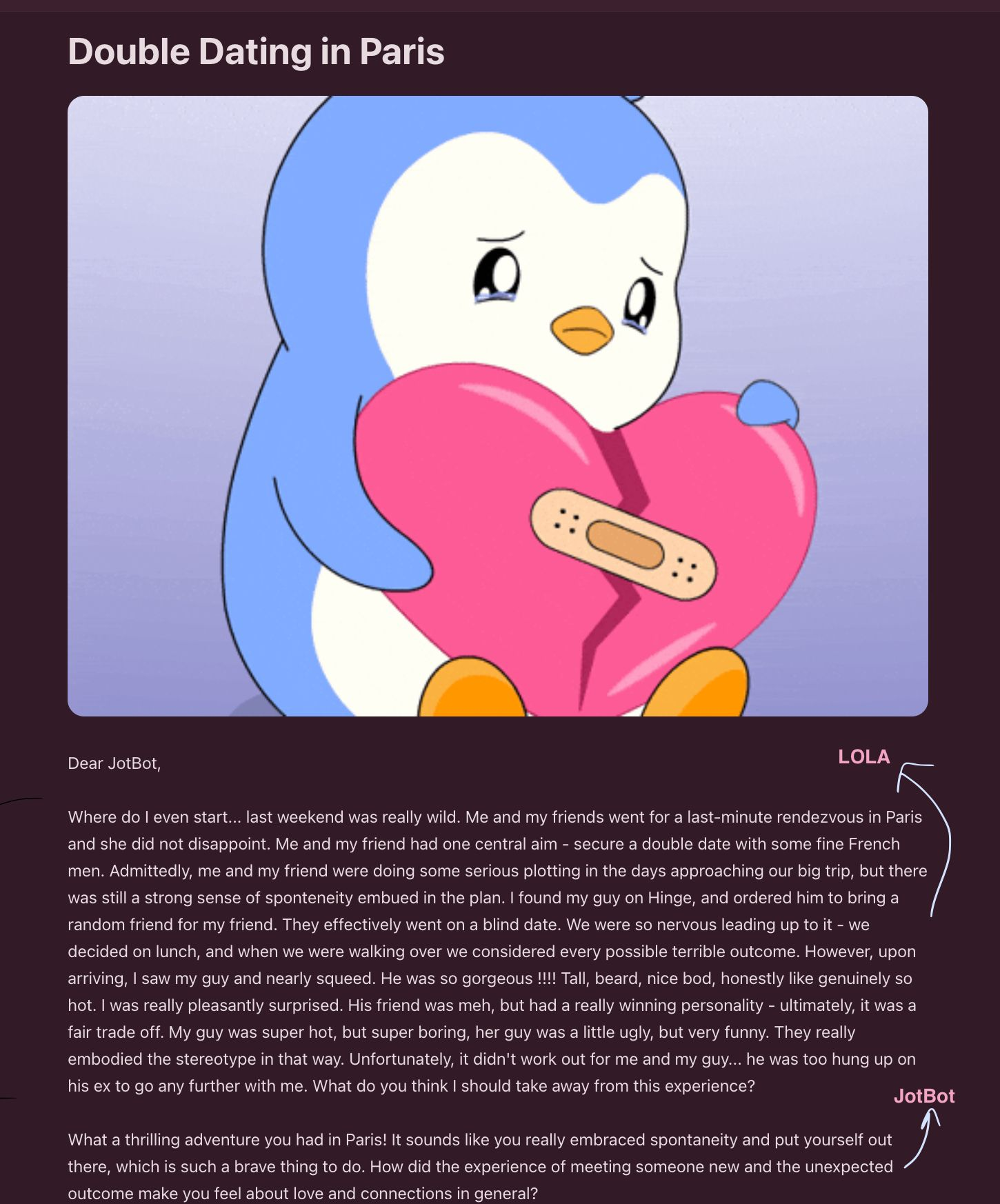
And then, because Lola is Lola, she added a GIF.
A sad little cartoon penguin clutching a broken heart. Slightly tragic. Slightly cute. Painfully accurate.
In jot, GIFs aren’t decoration — they’re emotional punctuation. Sometimes a moving image says what three paragraphs can’t. Sometimes it captures the vibe faster than language ever could.
For Lola, it made the entry feel complete. Personal. Hers.
A diary shouldn’t just hold your thoughts — it should look and feel like you. And whether that’s soft, dramatic, unserious, or all three at once, jot lets you build a space that reflects your inner world.
By the end, Lola didn’t walk away with a new relationship. But she did walk away with clarity, reassurance, and a diary entry she’d probably come back to one day and think, wow, I was actually kind of brave .
That’s the magic of jot.
It’s not about perfect days or tidy emotions. It’s about capturing life as it happens — the highs, the flops, the plot twists — and giving you space to sit with them, style them, reflect on them, and move forward.
Sometimes with insight.
Sometimes with a GIF.
Often with both.
And honestly? That’s diary-keeping done right.