There’s still a very specific image people have of journaling. It usually involves a notebook, a good pen, and a level of emotional clarity most of us don’t actually have on a daily basis. It feels calm, intentional, and slightly aspirational.
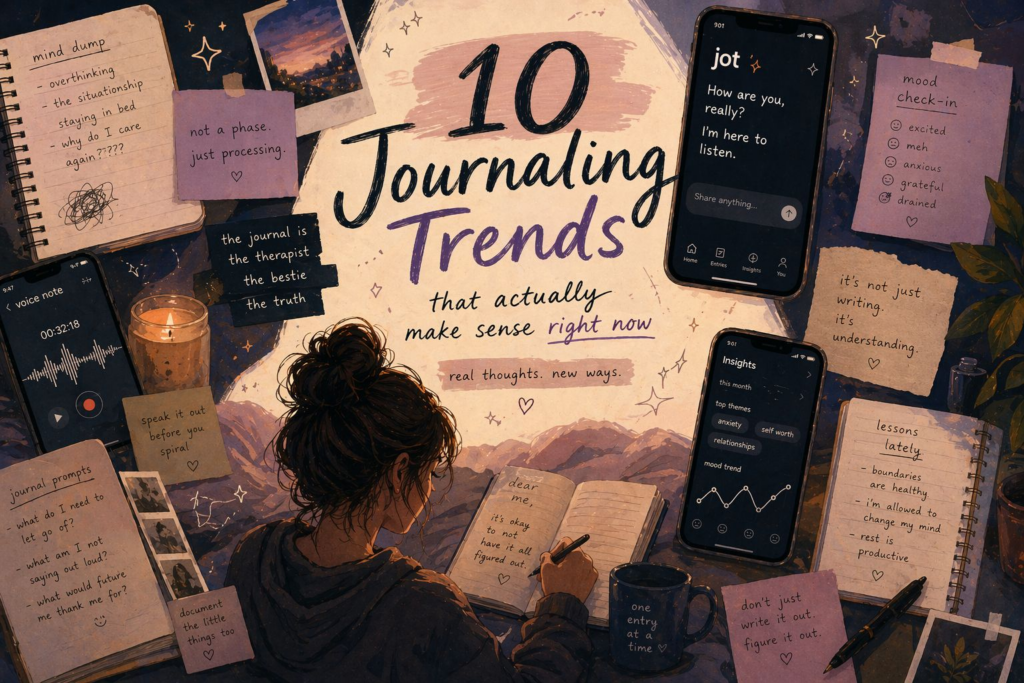
Most people don’t call it journaling, but that chaotic list of thoughts in your Notes app absolutely counts. It’s where things go when they feel too immediate or too messy for anything else. One second it’s a to-do list, the next it’s a paragraph about your feelings, and then somehow it turns into a life plan at 1am.
It’s unfiltered, inconsistent, and honestly, probably the most honest form journaling has ever taken.
Sometimes typing just feels like too much effort, especially when your thoughts are moving faster than your thumbs can keep up. Voice notes have quietly become one of the most natural ways to process things.
You talk it out mid-walk, mid-breakdown, mid-everything. You don’t edit yourself. You don’t overthink your wording. And weirdly, you often land somewhere clearer just by hearing yourself say it out loud.
This is probably the biggest shift. Journaling used to be about capturing what happened so you could look back on it later. Now it’s much more about understanding what’s happening while you’re still in it.
You’re not writing for your future self. You’re writing because your current self needs help making sense of something right now.
There’s no clean beginning, middle, and end anymore. A single entry might jump from a work frustration to a random memory to a relationship thought, and somehow still feel cohesive in its own way.
It mirrors how people actually think, which is rarely linear and almost never tidy.

The idea that journaling needs a specific time, place, or setup is slowly fading. If anything, people are leaning into whatever is easiest in the moment.
That’s why phones have become such a natural home for it. It removes the friction. It turns journaling from an “event” into something that’s just built into your day, like texting or scrolling.
At the same time, people are realising that completely unstructured journaling doesn’t always help. Sometimes you just end up going in circles.
That’s where guided prompts or reflective nudges come in. Not in a rigid, prescriptive way, but just enough to push a thought a little further than you would on your own.
It’s less about being told what to write and more about being gently asked the right question at the right time.
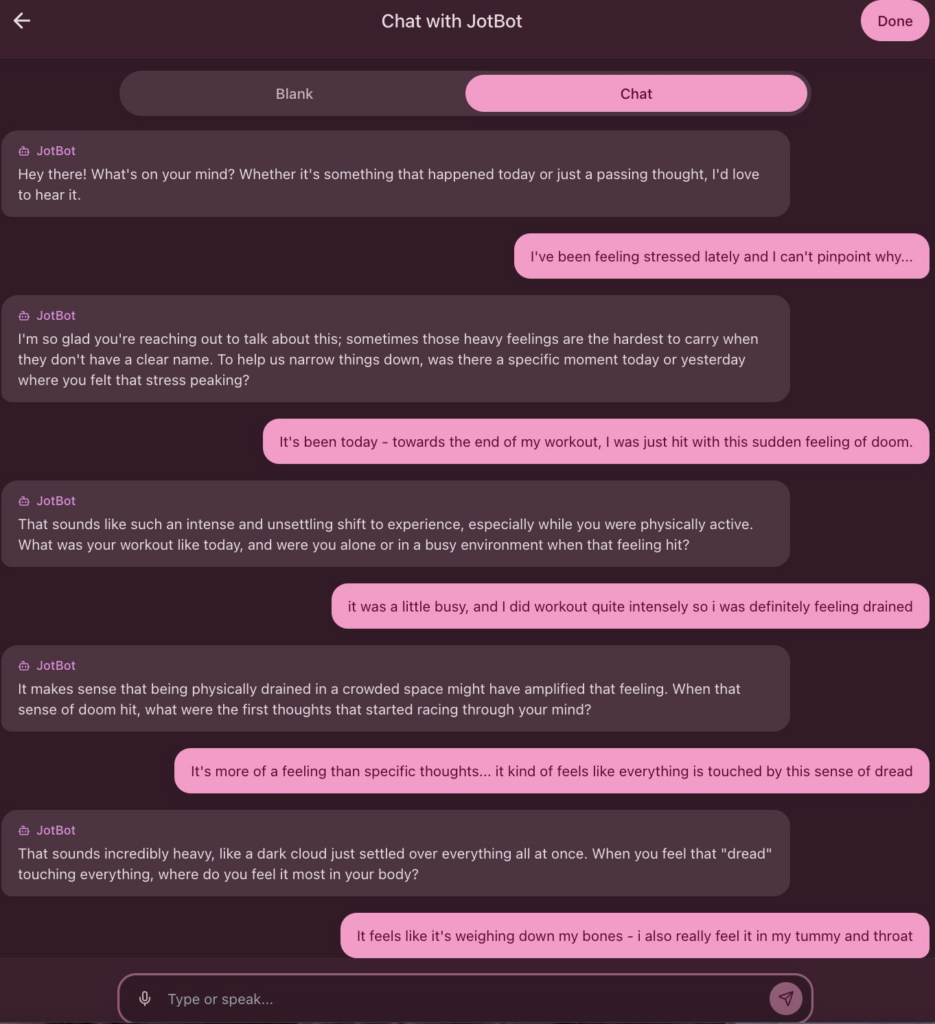
One of the more interesting shifts is that journaling is no longer always a solo experience. More people are gravitating towards formats where their thoughts feel met, not just recorded.
That might look like writing something down and then responding to it later, or using tools that turn journaling into something closer to a conversation.
It doesn’t replace reflection, but it changes the feeling of it. You’re not just sitting with your thoughts, you’re actually working through them. If you’re curious what that feels like in practice, Jot’s interactive online journaling is a good example.
Gen Z doesn’t really separate functionality from identity. If something is part of your daily life, it has to feel like yours.
That’s showing up in journaling through customisable spaces, adaptable formats, and tools that shift depending on how you think or what you need that day. The idea of a one-size-fits-all journal just doesn’t hold up anymore.
Some newer platforms like jot are leaning into this in a big way, offering everything from different reflection styles to visual customisation, which makes the whole experience feel less clinical and more personal.
There’s something oddly addictive about revisiting old entries and seeing patterns you didn’t notice at the time. The same thoughts, the same worries, the same turning points.
It’s one of the most underrated parts of journaling, and it’s becoming more intentional now. People don’t just want a place to write. They want a way to actually see their emotional patterns over time and understand how they’ve changed. That kind of reflection is where journaling becomes genuinely useful rather than just expressive, and it’s something digital tools like jot are starting to do really well.
This is the thread that ties everything together. Journaling has expanded so much that it almost doesn’t have a single definition anymore.
It can be typed, spoken, messy, inconsistent, structured, or completely chaotic. It can happen once a week or ten times a day. It can be private or semi-shared, intentional or impulsive.
And all of it still counts.

What’s interesting about all of this isn’t just that journaling is evolving, it’s why. People aren’t looking for a perfect record of their lives anymore. They’re looking for ways to cope, to process, to understand themselves without needing everything to be polished first.
That’s why the tools that are gaining traction tend to feel less like traditional diaries and more like something responsive, something that adapts to you rather than expecting you to adapt to it. Some platforms, like Jot, are starting to reflect this shift by focusing less on how journaling should look and more on how it can actually fit into your life as it is.
If you want to try a version of journaling that actually meets you where you are, explore jot now.