There is something a bit strange about the way we live now. Our days are split across a hundred tiny containers, each one responsible for a different part of us. One app holds our plans, another holds our people, another holds our tasks, another holds the half-formed thoughts we do not quite know what to do with. The result is not just organisational clutter. It is a strangely dislocated way of living, where the things we care about most are scattered across systems that never really speak to each other.
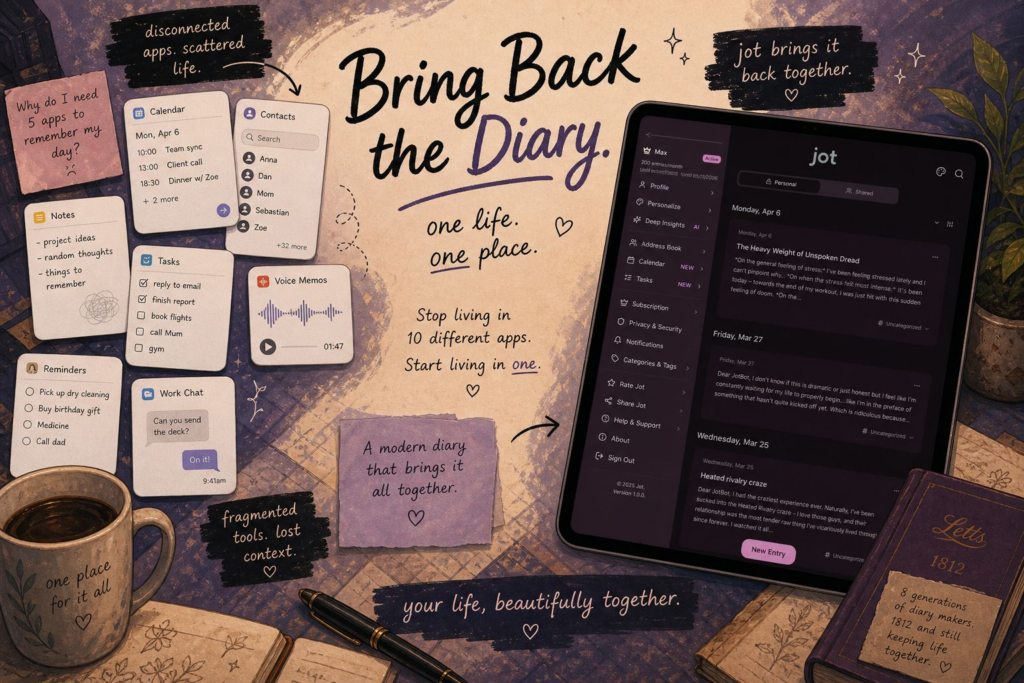
That is part of why the diary feels ready for a comeback. Not the sentimental version, all ribbon bookmarks and precious handwriting, but the original idea of a diary as a place where life actually comes together. The Letts family, whose story goes back to the first commercial diary in 1812, helped turn the diary into something practical as well as personal, and they are reinventing that idea now with jot.
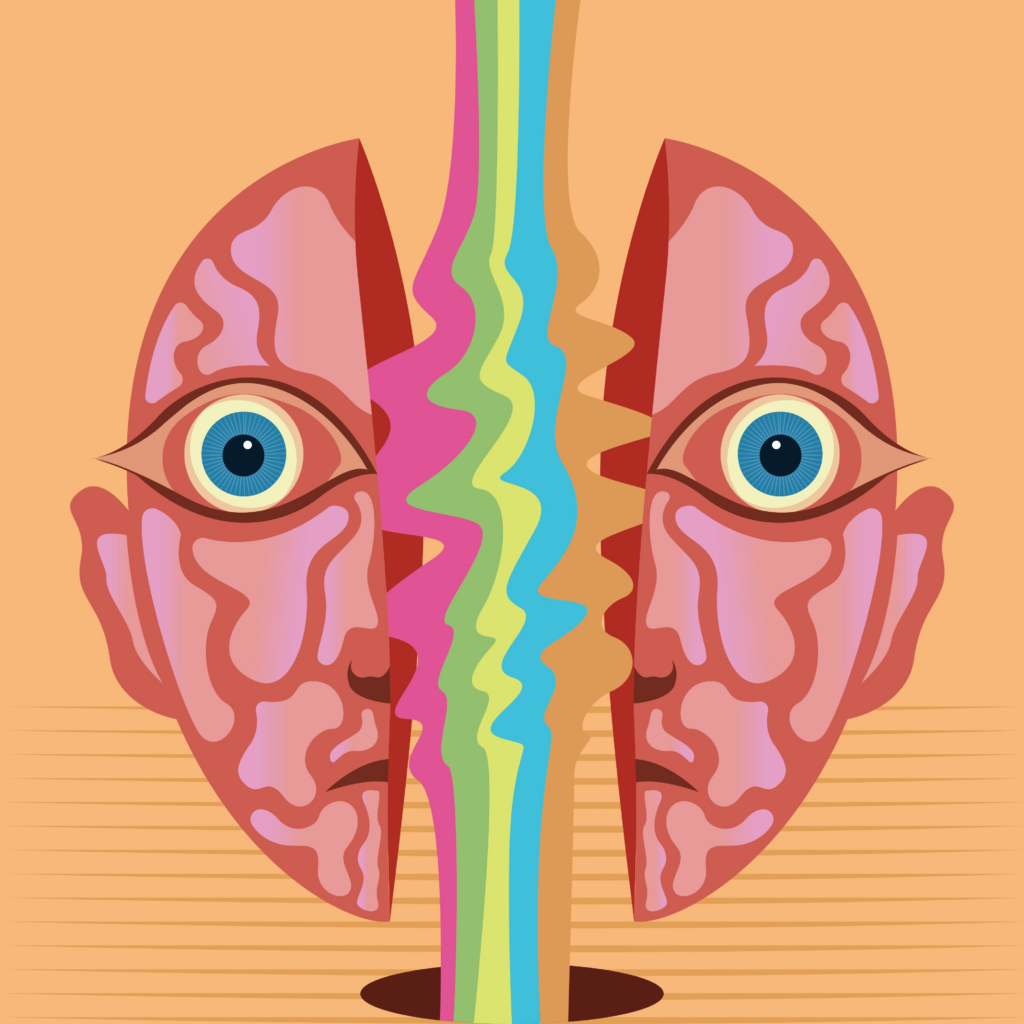
Most of us do not experience life in neat categories, even though our apps seem to insist on them. Work lives in one system, personal plans in another, reflections somewhere else entirely, and somehow the things that matter most end up spread out across five different places. Yo
u remember the dinner in your calendar, the feeling in your notes, the person in your contacts, the to-do in your task app, and the thought itself maybe in a voice memo you will never listen to again.
That split matters, because it changes the way we process our lives. Instead of one living record, we end up with fragments. Instead of a diary, we have a trail of digital debris.
The original diary did more than record the day. It gathered it. It created a place where thoughts, plans, emotions and routines could sit together long enough to make sense of one another. That is still what people seem to want, even if they are not always calling it that.
The appeal is not nostalgia for paper. It is coherence. People want a place where the different parts of their lives can meet. They want the personal and the practical in the same room. They want to be able to write something down, return to it later, and understand what it meant in the context of everything else that was going on.
That is a much bigger job than “note-taking”. It is more like life-keeping.
This is where a modern diary has to do something the old one never could. It has to work inside the rhythms of digital life instead of fighting them. It has to be quick when you need quick, reflective when you need reflective, and useful enough that you do not feel like you are maintaining another system just to keep your thoughts in order.
That is the practical problem jot is responding to. It brings your journal, calendar and tasks into one place, all created from a single entry, so you are not constantly switching between apps to hold a thought, plan a day, and remember what something meant to you in the first place. It is built for writing, talking or chatting, which makes it feel less like another system to manage and more like a diary that keeps up with the way people actually live now.
A better diary is not necessarily prettier. It is not even necessarily more disciplined. It is just more integrated.
It understands that a thought about a friend, a work deadline and a weird emotional wobble might all belong to the same moment. It gives you somewhere to put that moment without making you split it into ten different apps and pretend that is somehow simpler. And because it keeps the whole thing together, you can look back later and see patterns rather than isolated scraps.
That is the real value. Not just writing things down, but being able to come back and understand what they were doing there in the first place.
There is something quietly radical about saying the diary should be central again. Not sentimental, not retro, just central. In a world that keeps pushing us into smaller and smaller compartments, the appeal of one place that can hold the whole of your life is obvious once someone points it out.
That is what makes this feel bigger than a product feature. It is a response to a cultural problem. People are tired of life being scattered. They are tired of feeling like they have to assemble themselves from fragments. They want a space that is simple enough to use and complete enough to matter.
The diary never really went away. It just got broken up.
What is changing now is the idea that it has to stay that way. A modern diary can hold your thoughts, your plans, your habits and your emotional life without making you jump between five different systems to do it. That is why the diary is worth bringing back, and why it makes sense to build it for the way people actually live now.

If you want to see what that looks like in practice, start with jot. It brings the pieces back together.