There is something deeply compelling about a woman with a diary. Not in the pristine, “perfect cursive under fairy lights” sense, but in the much messier tradition of women documenting themselves in real time while actively unravelling. Pop culture has always understood this. Some of the most iconic female characters of the past thirty years are essentially just diarists with better lighting and more dramatic personal lives.
And honestly, it makes sense. The diary has always been one of the only places where female interiority gets to exist without interruption. A place to obsess, narrativise, spiral, analyse, romanticise, lie, confess, and occasionally incriminate yourself.
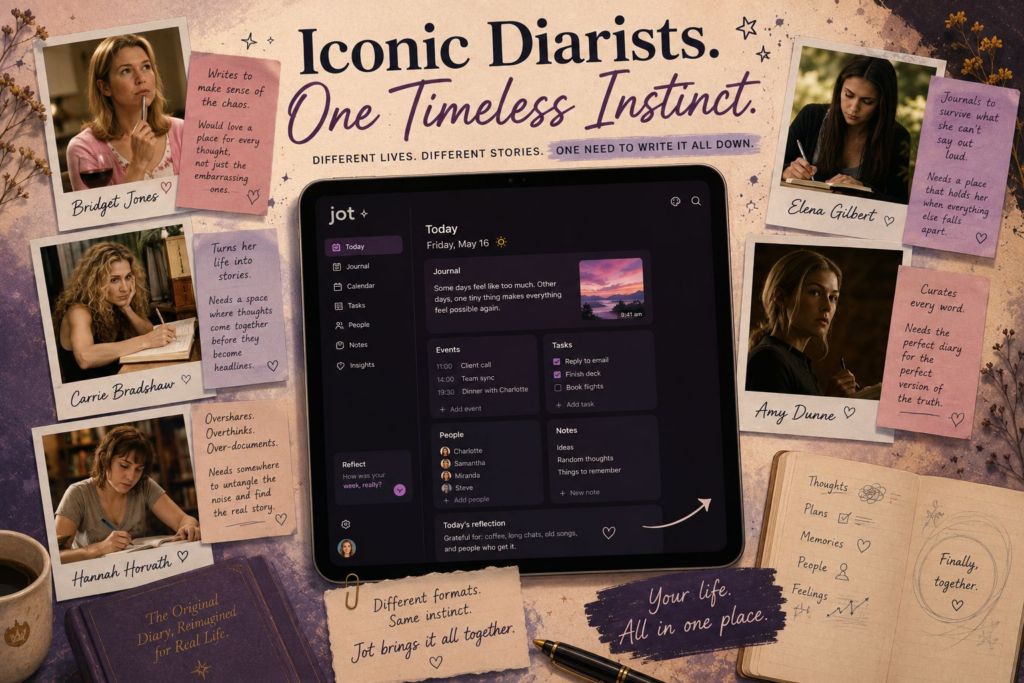
So, in honour of the diary renaissance, here are the most iconic diarists in pop culture history, what their journaling style says about them, and why each one would probably have been terrifyingly attached to jot.
Bridget Jones's Diary remains one of the purest examples of diary-as-survival. Bridget’s entries are half confession booth, half life audit. Calories consumed. Cigarettes smoked. Units of alcohol. Romantic humiliations endured before noon.
What makes Bridget such an enduring diarist is that her journaling is not aspirational. It is reactive. She journals because she is trying to understand herself while being battered by modern adulthood and deeply cursed dating prospects.
There is also something very Gen Z about her approach in retrospect. The self-awareness. The over-analysis. The way every small interaction becomes emotionally forensic evidence.
Honestly, Bridget would thrive with modern journaling tools. Half her entries would begin as voice notes recorded while speed-walking home from a disastrous dinner. She would absolutely use emotional pattern tracking and then immediately ignore the results in favour of texting Daniel Cleaver back anyway.
Most importantly, she would love the convenience of journaling that does not require sitting down ceremoniously with a leather notebook and “processing.” Bridget journals in motion. On trains. Hungover. Mid-crisis. This is increasingly how everyone journals now.
People forget that Sex and the City is basically built around a diary structure. Carrie just monetised hers.
Every episode begins with a question she cannot answer emotionally, so she intellectualises it into a column. Her entire writing style is essentially, “What if I turned my personal dysfunction into cultural commentary?”

Which, to be fair, has become the blueprint for approximately half the internet.
Carrie’s relationship to journaling is fascinating because she externalises everything. Unlike Bridget, who journals privately, Carrie processes through performance. Her thoughts only become real once narrated, shaped, and shared.
She would absolutely love conversational journaling. Not because she wants advice, but because she wants a responsive audience for every emotional revelation. She would ask one reflective question and somehow end up unpacking her entire attachment style by accident.
Also, the categorisation features? Carrie would become obsessive. Relationship entries tagged by era, man, emotional devastation level, and whether she cried in public.
Girls gave us Hannah Horvath, who approached writing with the energy of someone trying to emotionally bleed onto a Google Doc before anyone could stop her.
Hannah represents a very specific evolution of the diarist. The diarist as memoirist. The diarist as personal brand. The diarist as someone who says “I think I might be the voice of my generation” while actively ruining their own life.
What makes Hannah interesting is that she journals almost compulsively. She is constantly reframing events into narrative. Every bad thing happening to her becomes material before it has even emotionally settled.
In another life, Hannah would absolutely be posting cryptic Notes app screenshots online at 2am.
She also perfectly captures why digital journaling has become so appealing. Traditional journaling can sometimes feel too formal for the speed of modern thinking. Hannah’s thoughts arrive too fast and too chaotically for neat paragraphs. She would need something adaptive. Somewhere she could dump fragmented thoughts, revisit them later, and slowly begin finding patterns underneath the chaos.
Which is quietly one of the most interesting things about newer journaling platforms. They are not just storage systems anymore. They are becoming ways of understanding recurring emotional loops while you are still inside them.
Before vampires fully derailed her life, The Vampire Diaries begins with Elena journaling after the death of her parents.
And honestly, this might be one of the most emotionally accurate depictions of journaling in pop culture.
Elena does not journal because it is cute. She journals because grief creates emotional overflow and she has nowhere else to put it.
That is the thing people often misunderstand about journaling culture. Most people do not suddenly feel inspired to document their lives because things are going well. Journaling usually emerges during periods of emotional disruption. Breakups. Anxiety spirals. Identity crises. Grief. Confusion. Loneliness. Transitional periods where your inner life suddenly becomes too loud to carry unspoken.
Elena’s diary functions as emotional preservation. A way to stop herself from disappearing inside what happened to her.
And honestly, this is where digital journaling becomes genuinely useful rather than aesthetic. The easier it is to journal, the more likely people are to actually do it in the moments they need it most. Not later, not once they have bought the perfect notebook – immediately.
We need to talk about Gone Girl.
Because Amy Dunne may be the most terrifying diarist in modern fiction.
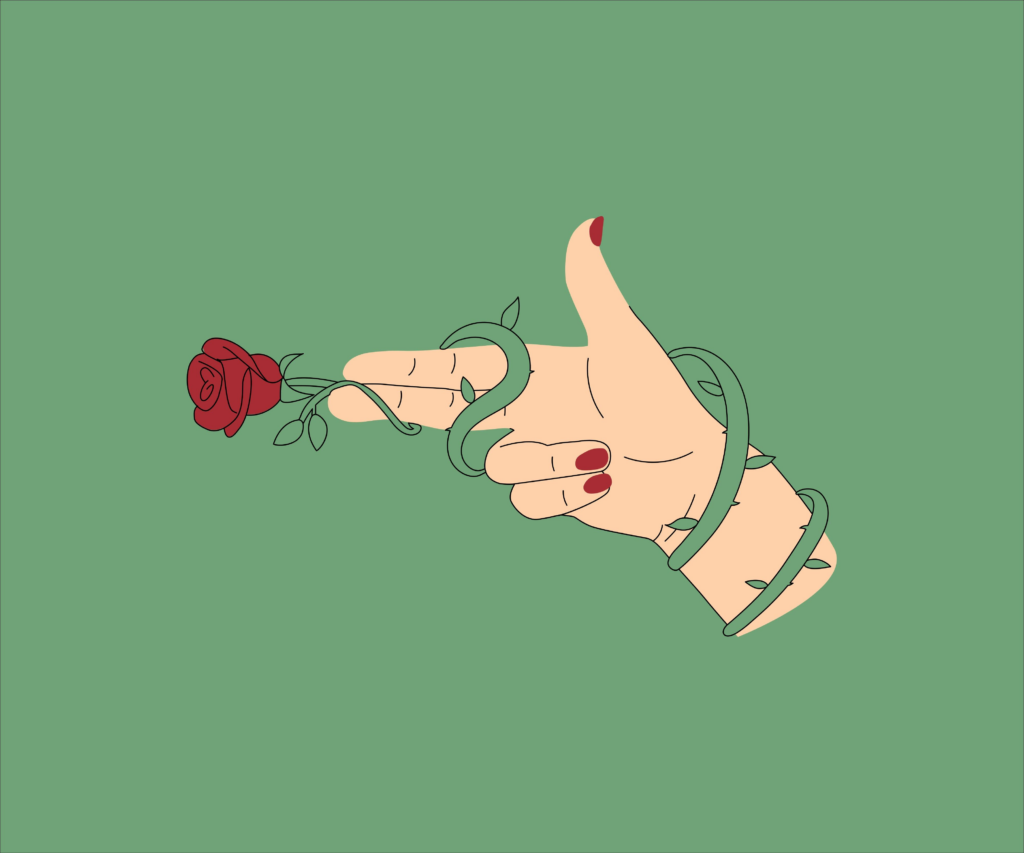
Her diary is not reflective. It is strategic. Curated. Manipulated. A constructed emotional artefact designed to control perception. Which is honestly fascinating because it reveals something uncomfortable about all diaries. They are never fully objective. Every diary is still a performance, even if the audience is just yourself.
Amy understands this better than anyone.
She writes herself into a character. She edits reality in real time. Her diary becomes less of a personal archive and more of a narrative weapon.
Would Amy use jot? Deeply unfortunately, yes. She would probably create colour-coded emotional profiles and build an entire false behavioural timeline. She would abuse tagging systems with frightening efficiency.
But she also represents an important truth about modern journaling culture, which is that people increasingly want their diaries to feel dynamic rather than static. Searchable. Organised. Interconnected. Something closer to a living map of their thoughts than a pile of disconnected entries.
What all these characters reveal is that the diary has never really been about the format itself. It has always been about creating continuity between thoughts, feelings, memories, relationships, and identity.
The problem is that modern life fractures all of that across different systems. Your memories live in photos. Your plans live in calendars. Your emotions live in notes apps. Your relationships live in messages. Your thoughts disappear into tabs you never reopen.
The original diary held life together in one place.
Now, the digital diary is trying to do that again.
That is what makes this new wave of journaling feel bigger than just another wellness trend. It is not really about writing more. It is about reconnecting the pieces of yourself that modern technology accidentally split apart in the first place.
And honestly, Bridget Jones would probably have loved that.
Your life already exists in fragments. The modern diary just brings them back together. Explore it now at jot.