September 8, 2026
Journaling, But Make It Easier: How Jot’s Templates Help You Go Deeper
We all know journaling is supposed to be good for us. Reflect on your day, understand your feelings, set some intentions, become the sort of person who drinks enough water and somehow has their life together. Lovely in theory. Slightly harder when you open a blank page and your brain responds with absolutely nothing.
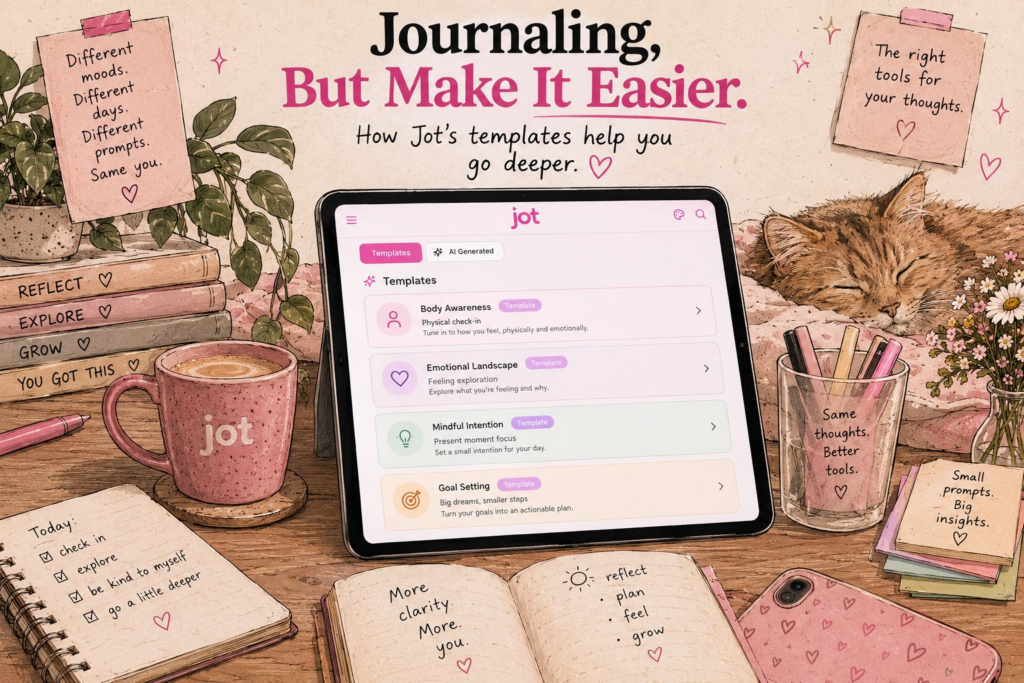
That is where journaling templates come in. Instead of staring at an empty entry wondering whether “dear diary, today was weird” counts as personal development, templates give you somewhere to start. Jot’s templates are designed to take the pressure out of figuring out what to write, while giving you the prompts and structure to explore the things you might otherwise skim over.
You Don’t Need More Things To Do. You Need Better Ways To Do Them.
The problem with most journaling advice is that it somehow turns journaling into another productivity project. Wake up at 6am, meditate, write three pages, list five things you are grateful for, set your intentions, analyse your childhood. And please do all of this before breakfast.
For most people, that is less of a calming morning ritual and more of an elaborate way to feel behind before 9am.
Templates make journaling much more accessible because they give you a starting point without dictating exactly what your entry needs to look like. Whether you have five minutes between meetings or half an hour to properly sit down with your thoughts, you can choose a format that fits what you actually need in that moment.
When You Don’t Know What You’re Feeling, Start Somewhere
Sometimes you know you are having a day. You just can't quite explain what kind of day it is.
Jot’s Emotional Landscape template gives you a way to explore that without requiring you to arrive with a fully formed psychological thesis. You can work through what you are feeling, what might have triggered it and what else is sitting underneath the obvious emotion.
It is particularly useful for those moments when “I’m fine” is doing a frankly heroic amount of work.
Instead of simply recording what happened, you can use the template to understand your reaction to it, which makes your diary more than a record of events. Over time, those entries can help you notice patterns in how you respond to people, situations, work and everything else life has decided to throw at you.
Your Body Has Opinions Too
We tend to think of journaling as something that happens entirely in our heads, but your body is usually keeping its own notes.
The Body Awareness template encourages you to check in with how you are actually feeling physically, from tension and energy levels to breathing and general bodily sensations. It gives you a structured way to notice things you might otherwise ignore while rushing from one thing to the next.
That matters because “I’m stressed” can mean a surprising number of things. It might mean you have too much work, you have not slept properly for three days, you have spent eight hours hunched over a laptop or you have simply been saying yes to far too many things.
Your body may have noticed the problem before your calendar did.

A Little Structure Can Make Reflection Much Easier
The beauty of a good template is that it does not tell you what to think. It simply gives your thoughts somewhere to go.
Jot’s Mindful Intention template, for example, can help you slow down, check in with where you are and think about what you want from the day ahead. It is less about constructing a perfect morning routine and more about creating a small moment of clarity before the day inevitably becomes emails, notifications and someone asking whether you “have five minutes”.
And because your entries live inside jot, these reflections do not have to exist in isolation. They become part of your wider diary, where your thoughts, plans and experiences can build into a bigger picture of your life.
The Point Is Not To Journal Perfectly
There is a strange pressure around journaling to do it correctly. The right notebook, the right pen, the right time of day, the right number of pages and preferably handwriting that looks suspiciously like it belongs in a stationery advert.
None of that is particularly important.
What matters is having a way to actually get your thoughts out of your head and onto the page, particularly when you do not quite know where to begin. Templates remove some of that friction, giving you prompts when you need them while still leaving plenty of room to make the entry your own.
Think of them less as rules and more as tools. You can follow the prompts, ignore half of them, write three words or end up going completely off-piste. The point is simply to make starting easier.
Because sometimes the hardest part of journaling is not finding something to say. It is getting past the blank page.
Ready to go a little deeper? Open jot, choose a template and see where the conversation takes you.