a page from the jot journal ✦
June 15, 2026
The Ultimate Guide to Building a 5-Minute Journaling Routine That Actually Sticks
Most people do not abandon journaling because they suddenly decide they are not reflective enough. They stop because it feels like too much. Too formal, too time-consuming, too easy to put off until later, which of course means never. The irony is that journaling is usually most useful when life feels busiest, messiest, or most emotionally inconvenient, which is exactly when it tends to feel hardest to do.

That is why five minutes is such a good place to start. Not because it is magically transformative in some overly polished self-improvement sense, but because it lowers the bar enough that journaling actually becomes something you can fit into a real day. It stops being an event and starts being a habit, which is often the difference between something you do once and something you actually keep.
That is also why digital journaling makes so much sense here. If your diary lives on your phone, it can fit into the tiny gaps in your day instead of becoming one more thing you have to schedule. And when the diary is built to work with the way you already think, it feels a lot less like maintenance and a lot more like support.
1. Start with your dreams before the day gets in the way
One of the easiest ways to begin a journaling habit is to use the moment when you are still half in sleep mode and your brain has not yet been hijacked by email, work chats, or the general nonsense of the day. Dreams are perfect for this because they are already weird, emotional, and half-formed, which means they do not need to be polished to count.
A quick dream entry in jot is a very easy five-minute win. You can jot down what happened, however fragmented it is, and let the AI help you think about what might be going on underneath it. That is useful not because every dream secretly has a grand hidden meaning, but because it gets you into the habit of noticing your inner life before the outside world fully takes over. It is a tiny ritual, but it can set the tone for the rest of your day.

2. Turn shared plans into shared journaling
Not every diary moment has to be private. Sometimes the things you want to remember are social ones, like dinner plans, holidays, birthdays, or the kind of slightly chaotic group event that sounds simple when it is first suggested and then somehow becomes the emotional centre of your week.
That is where jot’s shared journal feature becomes really interesting. You can create an event, invite the right people through your address book, and have it sync into your calendar so it sits in the same place as the rest of your life. It turns journaling into something more collective, which is a much better reflection of how a lot of people actually live now. We do not just experience things alone anymore, and our diaries do not need to act like we do.

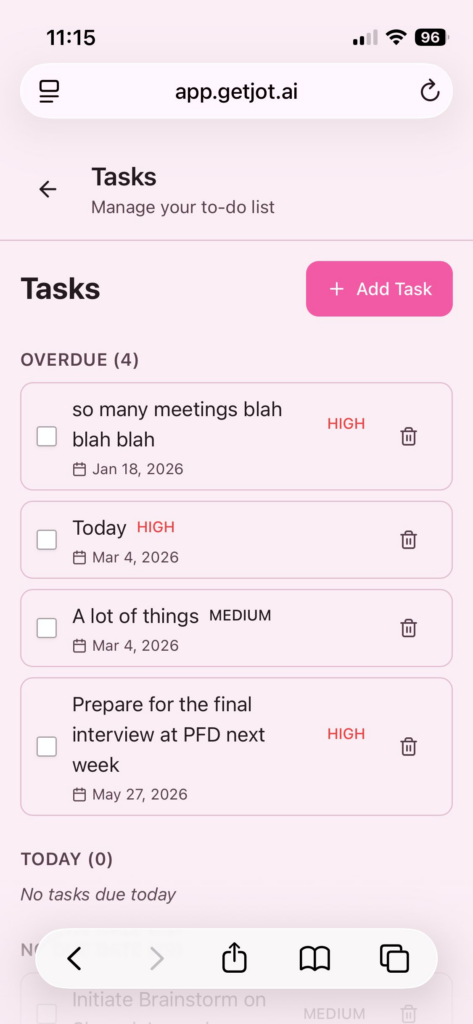
3. Brain-dump your to-do list and let jot do the sorting
A lot of people think journaling and productivity are separate things, but in reality they overlap more than we admit. Half the time, what you need is not a beautifully written reflection but a place to unload all the things circling around in your head before they become stressful.
This is one of the smartest five-minute habits you can build. You open a fresh entry, write the roughest possible version of everything you need to do, and stop worrying about whether it looks neat. Then jot can turn that messy spill of thoughts into individual tasks, which means your journal does not just hold your brain dump, it helps you act on it. That is a very different experience from writing a to-do list in a separate app and then forgetting it exists.
4. Use your diary for a proper end-of-day debrief
The end of the day is one of the best times to journal because you are no longer trying to stay ahead of everything. You can finally look back, however briefly, and notice what actually happened. Not the curated version. Not the productive version. Just the real version, which is usually more useful anyway.
A five-minute end-of-day debrief in jot can be as simple as asking yourself what felt good, what felt off, and what you want to carry into tomorrow. The point is not to produce an immaculate reflection. It is to give your day somewhere to land. Over time, that becomes one of the most valuable parts of journaling, because it starts showing you patterns in your mood, your energy, and the things that quietly keep showing up.
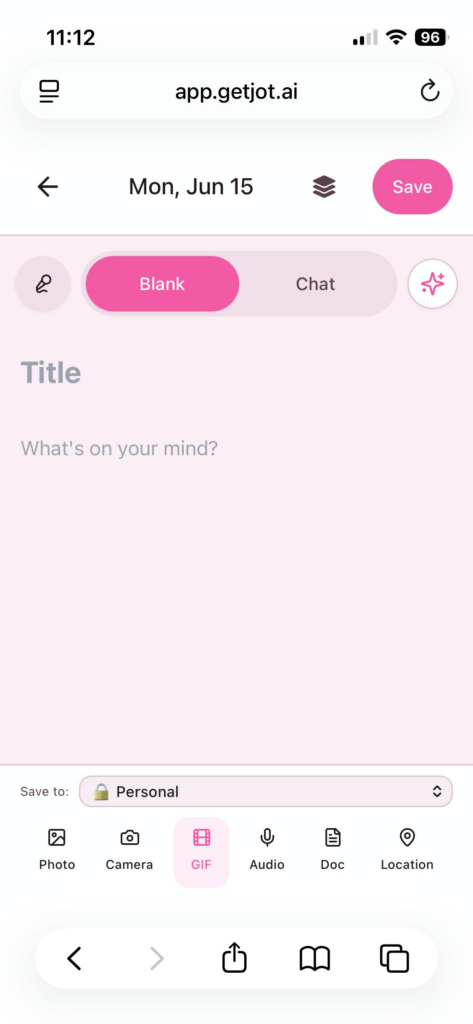
5. Build the habit around moments you already have
The easiest routines are the ones that hide inside the life you already have. If journaling only happens when you create a perfect moment for it, it will probably not happen very often. But if it lives in moments you already repeat, it suddenly becomes much easier to keep up with.
That could mean writing for two minutes with your morning coffee, dumping a thought after a commute, or opening jot before bed while you are still half-thinking about the day. The important thing is not how poetic the entry is. It is that it is happening regularly enough to become familiar. The more natural the entry point, the more likely journaling is to become something you return to without having to talk yourself into it every time.
What makes a five-minute routine actually work
A good journaling habit is not really built on discipline alone. It is built on ease, repeatability, and the feeling that the process gives you something back. If it takes too long, feels too blank, or lives too far away from the rest of your day, it will always be easy to abandon.
Ready to build a diary habit that actually fits your life? Start your first entry at getjot.ai.